Holistic Health and Happiness

P
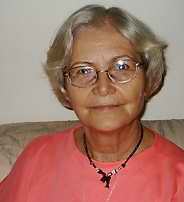
rofessor Maria Kuman is a long-term university professor and writer. She jokes that all of her life she has been a writer among the scientists and a scientist among the writers. Now, after writing so much about science and ancient history, she is finally writing science-fiction novels, which unite both.
I was born in the country of Bulgaria. I was six years old when I announced that I would be writing books, but it would be at the end of my life when I would have the wisdom. What I understood about wisdom being 6 years old? This was the answer I was giving to the question what I would do when I grow up. So, I always knew I would be a writer.
I started writing down my poetry since I learned how to write. In high school, at the final exam, I got the national award for the best literature work, and my literature teacher was very proud that one of her students earned the national award. She told me that I definitely have a writing talant.
When she learned that I enrolled in major specialty physics and minor mathematics, she was very upset that I would bury my bright writing talent. I told her that if I had the talent she believed I had, it would show up regardless what I study and it did.
My PhD degree was from the University of Saint Petersburg, Russia, and was on the material of the Russian Space Station, which is now International Space Station. I am one of the few people, who know what it was made of. It was kept secret for a few decades.
I already had my PhD degrees in Physics and Mathematics when I wrote my first funny story for a humoristic journal. The editor told me to leave the manuscript and pass by the next day for an answer. When I appeared at his door the next day, he came from behind his desk to the middle of the room to meet me and shake my hand.
"Congratulations!" he said. "This is the best work I've read for years. It will be printed tomorrow because I took a material that was planned and put your work instead. And I gave you the highest payment possible - $1 per word - because the funny story is excellent. Come on Friday to get your money and please bring more funny stories."
Instead of bringing more funny stories to the exalted editor of the humoristic journal, I wrote a popular-science article for a popular-science journal. The editor took the manuscript and told me to come for an answer after a week. When I appeared at his door a week later, he said: "The article is so well written that a word cannot be crossed or added without destroying the harmony of the text. Excellent work, it will be published as it is. Bring more articles like this one."
Instead of bringing article to the same editor, I brought article to the editor of another popular-science journal. And I got from him praising for my work and invitation to bring more articles. This was the start of my writing career. So, I don't know what it is to knock on the doors of editors and be rejected. When I met my literature teacher later, she said she was very glad I started writing and she loved my articles.
I was invited to write a scenario for popular science movie and I did. I also wrote a lot of articles for the Sunday newspaper Orbit and became friend with the vice-editor, who was handling the health column. I learned from her how to come up with catchy titles. However, at the top of my writing carrier, I fell in love with a German who was American citizen, married him, and moved to live in the US.
In the US, I needed to start from the very beginning. I wrote an article for the local Knoxville newspaper about the fertilized water, which we drink in Tennessee, but I was surprised to hear that they didn't accept articles from freelance writers; they have staff writers to write about this. Where is the freedom of speech? I asked myself.
I wrote popular science papers, sent them to: Popular Science, National Geographic, etc. journals and got the same answers. They offered me to share my ideas so that their writers can write about them. My answer was: "No! Thanks!" because it took me years of hard work as a scientist to come with these ideas.
What to do? To quit writing was out of question. So, I started looking for alternative ways. And I found a way around. I started publishing articles in Canada in magazine Alive. After I published a series of articles there, which were a great success, I lost my part-time teaching job at the University because of budget cuts.
This made me a full-time book writer. I have written and published the total of 35 books (of 200 pages each), one text-book for my students, and more than 400 articles. Many of my books are about how to stay healthy and how to be happy. Now, I am going to tell you how and why I became a self-publishing writer.
I wrote a book explaining how acupuncture works and I sent it for publishing to Paradigm Press. The publisher called me and said that he loves the book because this is the first book that explains how acupuncture works. He saidhas published more than 50 books on acupuncture, enough to really appreciate a good one like this.
He said: "Unfortunately, I cannot publish your book because President H. W. Bush signed a law that if I don't sell the book published the first year, I need to pay tax on the books I didn't sell. Before I would publish a book like yours,and later I would be proud that I was able to see the future of this book. Now I cannot do this.”
Unfortunately, he said, my book is way ahead of our time and this creates a problem. It will take many years until America will be ready to embrace and appreciate my book. Since all other publishers will be in the same situationas him, his advice to me was to start self-publishing. And that is what I did.
Since I was ahead of my time not only with the acupuncture book, but also with the other books of mine, I started self-publishing. I named my self-publishing company Health and Happiness Books because most of my books were about health and happiness.
All my books reflect my original and scientific way of thinking. If I don't have something new and original to say, I don't write a book. And the statements in my books are not hypothetical; they are science based because I am a scientist. Even my science-fiction books are written after profound literature search.
Thus, it turned out that it is great to be a scientist and writer at the same time. I am joking that the whole my life I have been scientist among the writers and writer among the scientists. My extended experience in teachingand popularizing science helps me present even complicated things in a manner simple to understand.
The fact that I can read and understand more than 12 languages allowed me to read ancient texts and web pages of many nations in their original native language. This gave birth to the three historic books I have written. My knowledge of ancient Chinese and Hindu texts helped me integrate the ancient wisdom and the modern science in a unique way.
In all my books, united ancient wisdom and modern science can be seen as a red thread.